©
picture alliance/dpa/Kay NietfeldNATO presence in the far north: "Vigilant and capable of acting"
- Date of publication
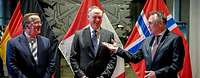
Germany, Canada and Norway want to intensify their military cooperation. The defence ministers of the three countries – Boris Pistorius, David McGuinty and Tore O. Sandvik – met in Ottawa on 20 October 2025 to discuss cooperative efforts to further improve security and deterrence capabilities in the North Atlantic.
Germany, Canada and Norway are close security partners within NATO. Their cooperation extends across multilateral Alliance commitments on NATO’s eastern flank, contributions to maritime tasks in the North Atlantic and joint exercises, missions, and capability development measures aimed at strengthening deterrence and collective defence.
Joining forces: Maritime Security Partnership
Together with Denmark, Germany, Canada and Norway are building a maritime security partnership for the North Atlantic. The benefits of this initiative include the ability to compile a common operational picture, conduct strategic antisubmarine warfare, safeguard the freedom of navigation, and protect critical underwater infrastructure by establishing a stronger overall presence of the Alliance in the North Atlantic region. The exchange of maritime reconnaissance data and joint trainings/manoeuvres are also aimed at improving NATO's capability to respond to potential threats in the far north. The air forces and, in particular, the navies, are planning joint trainings, exercises and operations with their submarines and frigates - and with the P-8A Poseidon maritime patrol aircraft soon to be fielded.
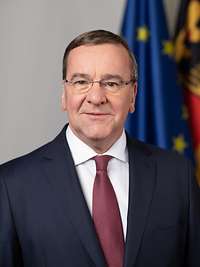
Together, we want to improve the protection of critical maritime infrastructure and sea lines of communication in the North Atlantic.
"These joint exercises make us stronger," Minister Pistorius said on 21 October in a joint statement with his Norwegian counterpart, Sandvik, explaining that the Maritime Security Partnership strengthens NATO's presence in the North Atlantic and in arctic waters, and that it is necessary to “be vigilant and maintain our capacity to act.”
Opportunities in Submarine Cooperation
The prospect of deepening submarine cooperation between the three countries was another focal point of the talks. Germany and Norway are jointly developing the Type 212 CD submarine class – a state-of-the-art boat with fuel cell propulsion system, improved sensor technology, increased range and reduced acoustic signature compared to its predecessor. Procurement, training, maintenance and logistics are coordinated between the two countries. This improves interoperability, reduces costs, and strengthens NATO's overall defence capabilities below the waves.
Germany and Norway will procure six boats each. Among other capabilities, they are suited for the support of special forces, the protection of critical infrastructure and antisubmarine operations. In this way, the project improves NATO's deterrence and defence capabilities, for instance when it comes to protecting the GIUK gap in the North Atlantic. The term refers to the sea and air space between Greenland, Iceland and the United Kingdom, an area that is of great importance for securing the logistic lines of communications with NATO members USA and Canada.
Canada is planning to procure several new submarines, and could benefit from joining the armaments cooperation. "The advantages are obvious," said Minister Pistorius. "We offer the world's most modern conventional submarines." He added that the Type 212 CD submarines were not just an option for the waters between NATO's eastern flank and North America, but also for the Indo-Pacific region.
Sandvik stressed that Norway is a "proud partner" in this project. "We are the eyes and ears in the north," Sandvik explained, referring to the significance of the joint project for the Alliance's capabilities, and also, Norway's proximity to Russia’s Northern Fleet. "We need more integration," Sandvik said, citing the joint submarine programme as an example of this process.

German Defence Minister Boris Pistorius and his Norwegian counterpart, Tore O. Sandvik, were welcomed with military honours during their visit to Ottawa.
©
Bundeswehr/Christoph KassetteAlliance solidarity in the Baltic States
Germany and Canada are also working closely together on NATO’s eastern flank. Germany leads the Multinational Battlegroup in Lithuania, and is in the process of establishing a combat brigade there. Meanwhile, Canada leads the battlegroup in Latvia, and also intends to step up its commitment in the Baltic nations. "We welcome Canada's plans to strengthen its military presence in Latvia by 2026," Pistorius said. The two countries can also build on their trustful cooperation within the 3+3 format. This format provides a platform for the framework nations among NATO’s troop contributors – Germany, Canada, and the United Kingdom – to coordinate their military activities with the Baltic host nations of Lithuania, Latvia and Estonia. In addition to exchanging information, they also use the format to coordinate their political positions on security issues.
Germany and Canada’s commitment in the Baltic States is sending a clear signal of solidarity, demonstrating they stand ready to do their part for collective defence. "We can count on Canada, our transatlantic bond is strong," Pistorius said during what was his third visit to Ottawa, pointing out the mutual trust and cooperation in the Ukraine Defence Contact Group. Pistorius also highlighted Canada's commitment to training Ukrainian soldiers and its efforts, such as funding IRIS-T air defence systems to protect the Ukrainian population, infrastructure and military facilities.
Maritime logistics for security in the North Atlantic
Prior to his trip to Canada, Minister Pistorius had visited Iceland. The political talks there also focused on strengthening the Alliance's deterrence and defence capabilities in the North Atlantic. While Iceland does not have any armed forces of its own due to its small size, the country’s geostrategic location provides valuable options for monitoring maritime routes in the region. Iceland also has infrastructure and civilian capabilities that are available to NATO nations during exercises and operations.
Going forward, Germany intends to make even greater use of the island nation’s modern port infrastructure, and there are considerations to temporarily station P-8A Poseidon maritime patrol aircraft in Iceland. Pistorius and Icelandic Foreign Minister Thorgerdur Katrín Gunnarsdóttir signed a letter of intent to this effect.
Author: Florian Manthey