
©
Bundeswehr/Christoph KassettePistorius in Reykjavik: Germany and Iceland deepen military cooperation
- Date of publication
Germany and Iceland intend to expand their security cooperation in the Arctic region significantly. This includes plans to station German reconnaissance aircraft on the island. During his first visit to Iceland on 19 October 2025, German Minister of Defence Boris Pistorius emphasised the importance of the region to NATO and underlined Germany's determination to further raise its level of commitment in the area.
In response to the threat posed by Russia, NATO partners Germany and Iceland will further intensify their military cooperation in the future. To this end, Germany’s Minister of Defence Boris Pistorius and Iceland's Foreign Minister Thorgerdur Katrín Gunnarsdóttir signed a letter of intent in Reykjavik. The aim is to cooperate more closely, primarily in the field of maritime logistics, as Pistorius explained in the Icelandic capital. More specifically, the focus will be on air and sea surveillance as well as the protection of critical infrastructure and cyber security measures. Pistorius stated that Germany will increase its military presence on the island. This will provide the Bundeswehr with an important port of call for its combat vessels, submarines and supply ships strategically located in the far north.
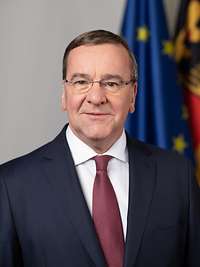
We are ready to assume more responsibility for stability and security here in the far north. The German Navy will deploy its frigates, submarines, and new maritime patrol aircraft to provide situational awareness in the North Atlantic.
Pistorius and Gunnarsdóttir both concurred that the agreed steps provide an important basis for strengthening NATO's deterrence and defence capabilities in the North Atlantic and in the Arctic. The Icelandic Foreign Minister also underscored that, in her view, Germany is now a leading force when it comes to strengthening security and defence in Europe.

Going forward, Germany and Iceland will boost their military cooperation. A letter of intent to this effect was signed by German Defence Minister Boris Pistorius and Icelandic Foreign Minister Thorgerdur Katrín Gunnarsdóttir in Reykjavik.
©
Bundeswehr/Christoph Kassette"We can rely on the support of our Icelandic friends"
The plans laid out by Pistorius include utilising Iceland's state-of-the-art port infrastructure and its reliable local logistics and supply options as well as using the air base in Keflavik for Germany's new P-8A Poseidon. These German maritime patrol aircraft are designed for antisubmarine warfare and can patrol large maritime areas.
Taking those steps was in the common interest of both nations, the Defence Minister stressed, adding that the security situation required that Germany increase its commitment: "Every day, Russia's shadow fleet threatens our critical maritime infrastructure."
While in Reykjavik, Pistorius also spoke with Iceland’s Chief of Defence, Jónas G. Allansson, and with Icelandic Prime Minister Kristrún Frostadóttir. The meetings were followed by a visit to Iceland's Keflavik Air Base and its NATO command post.
Iceland's strategic importance to NATO
While Iceland was one of NATO's founding members in 1949, the country does not have any armed forces of its own except a coast guard of about 250 men and women. The NATO Allies take turns securing the Icelandic airspace. However, Iceland is of great importance for NATO's early warning capability thanks to its geographical location, which also makes it an important point of call and logistic hub for its Allies. The German Navy is among those who can resupply themselves there. Pistorius described Iceland as a bridge across the North Atlantic and a gateway to the Arctic.
Germany and Iceland have been maintaining a close and friendly relationship for more than 70 years, reflected primarily in cultural and economic exchanges, but also within the framework of NATO and the EU, and in their support of Ukraine. Now, cooperation in the security sector is becoming increasingly important given the new threat posed by Russia, and also with regard to climate change. For Pistorius, this visit to Iceland marked the beginning of a multi-day trip that also took him to Canada and the United Kingdom.
Author: Lara Finke