An accomplishment of all the Ministers of Defence
The success of the Bundeswehr is also due to the accomplishments of the former Ministers of Defence. As early as the mid-1960s, the Bundeswehr was involved in humanitarian aid operations under Kai-Uwe von Hassel. Georg Leber is remembered as a "soldiers' father”. The kindness with which he treated the Bundeswehr's personnel, who held him in high esteem, earned him this moniker.
-

Federal Minister of Defence from 2021 to 2023: During Christine Lambrecht’s term of office, the Bundeswehr resumed national and collective defence.
©
Bundeswehr/Tom Twardy -

Minister of Defence from 2019 to 2021: Under Annegret Kramp-Karrenbauer, the so far longest Bundeswehr foreign deployment in Afghanistan was terminated.
©
Bundeswehr/Sebastian Wilke -

Minister of Defence from 2013 to 2019: Ursula von der Leyen initiated the modernisation of the Bundeswehr.
©
Bundeswehr/Sebastian Wilke -

Minister of Defence from 2011 to 2013: Thomas de Maizière (CDU) shaped the Bundeswehr following the suspension of compulsory military service.
©
Bundeswehr/Neuhaus Fischer -

Minister of Defence from 2009 to 2011: Karl-Theodor Freiherr zu Guttenberg (CSU) paved the way for the suspension of compulsory military service.
©
Bundesregierung/Jürgen Gebhardt -
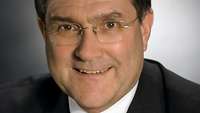
Minister of Defence from 2005 to 2009: Franz Josef Jung (CDU) saw the Bundeswehr participate in a number of operations.
©
Bundeswehr/Anne Neuhaus-Fischer -
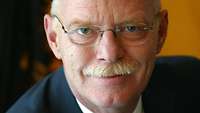
Minister of Defence from 2002 to 2005: Peter Struck (SPD) turned the Bundeswehr into armed forces on operations.
©
Bundeswehr/Detmar Modes -

Minister of Defence from 1998 to 2002: Rudolf Scharping (SPD) was in office during the Kosovo War and the 9/11 attacks.
©
Bundeswehr/Anne Fischer -
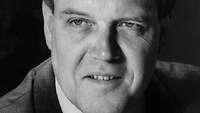
Minister of Defence from 1992 to 1998: Volker Rühe (CDU) saw the Bundeswehr participate in peacekeeping missions outside NATO territory.
©
Bundeswehr/Detmer Modes -
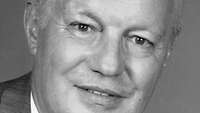
Minister of Defence from 1989 to 1992: Gerhard Stoltenberg (CDU) was the first Minister of Defence in a united Germany.
©
Bundeswehr/Anne Fischer -
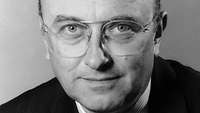
Minister of Defence from 1988 to 1989: Rupert Scholz (CDU) continued the policy of appeasement between the Blocs.
©
Bundeswehr -
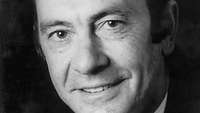
Minister of Defence from 1982 to 1988: Manfred Wörner (CDU) was a former fighter pilot and later became Secretary General of NATO.
©
Bundeswehr/Anne Fischer -
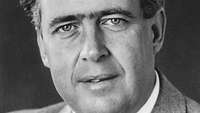
Minister of Defence from 1978 to 1982: Hans Apel (SPD) was the first Minister of Defence not to have served in the military. The NATO Double-Track Decision was taken during his term of Office.
©
Bundeswehr -
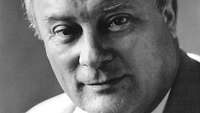
Minister of Defence from 1972 to 1978: Georg Leber (SPD), often referred to as the "soldiers' father", the Bundeswehr was expanded further.
©
Bundeswehr/Anne Fischer -
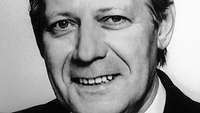
Minister of Defence from 1969 to 1972: Helmut Schmidt (SPD) was the first Social Democrat to serve as Defence Minister.
©
Bundeswehr -
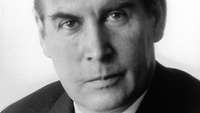
Minister of Defence from 1966 to 1969: Gerhard Schröder (CDU) was one of the top-level politicians in the first years of the Federal Republic of Germany.
©
Bundeswehr -
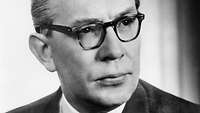
Minister of Defence from 1963 to 1966: Kai-Uwe von Hassel (CDU) expanded and gradually consolidated the armed Forces.
©
Bundeswehr/Schmidt -
Minister of Defence from 1963 to 1966: Kai-Uwe von Hassel (CDU) expanded and gradually consolidated the armed Forces.
©
Bundeswehr/Schmidt -
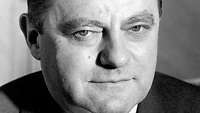
Minister of Defence from 1956 to 1962: Franz Josef Strauß (CSU) had a considerable influence on post-war Germany.
©
Bundeswehr -
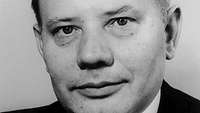
Minister of Defence from 1955 to 1956: Theodor Blank (CDU) was the co-founder and name giver of the authority referred to as "Amt Blank" and the first Minister of Defence.
©
Bundeswehr


Gerhard Stoltenberg was in office at the time of German reunification and assumed the full command authority over the all-German armed forces on 3 October 1990. Under his successor, Volker Rühe, the Bundeswehr gradually became an army on operations. The armed forces gained their first experience of operations abroad by supporting the UN missions in Cambodia, Somalia and the Balkans.
New challenges
Under Rudolf Scharping, the Bundeswehr took part in the NATO air strikes on Serbia during the Kosovo conflict. After 9/11, he laid the foundation for Germany to contribute to the fight against international terrorism. His successor, Peter Struck, coined the much-quoted phrase that Germany is also defended at the Hindu Kush. In addition to that, Struck initiated the "transformation" of the Bundeswehr, arguably the most comprehensive reform in its history. Its primary aim was to prepare the German armed forces for conducting operations abroad. Karl-Theodor zu Guttenberg also paved the way for a radical reform: the suspension of compulsory military service on 1 July 2011. The work of Ursula von der Leyen as Minister of Defence stands for the Reversal of Personnel Trends, of Materiel Trends and of Budget Trends in order to modernise the Bundeswehr and thus to advance the Attractiveness Agenda. During von der Leyen´s term of office, the Bundeswehr began its fight against the so-called "Islamic State”. In addition, by creating the Cyber and Information Domain Service, a new military organisational section was established.
These are but a few examples. All the Ministers of Defence to date have contributed their share to the successful history of the Ministry of Defence since 1955.